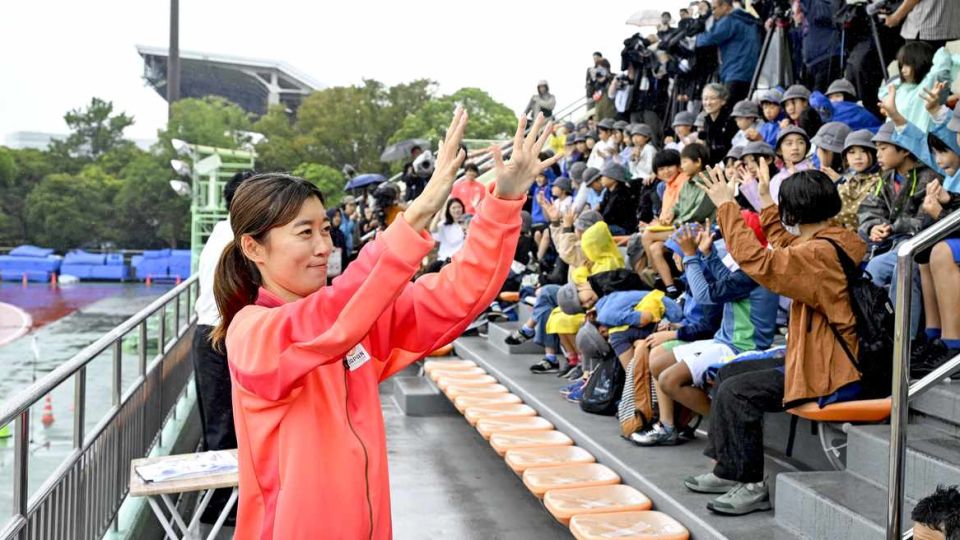
Arya News - About 3,000 athletes from 80 countries and regions will compete in 21 events from Nov. 15-26 in Tokyo, Shizuoka and Fukushima prefectures.
TOKYO – Preparations for the Tokyo 2025 Deaflympics, which open on Nov. 15, are on the right track.
Learning a lesson from the Tokyo Olympics and Paralympics bid-rigging scandal, organizers of the upcoming event have steadily recruited sponsors without the mediation of advertising agencies. They have also secured an adequate number of sign language-proficient volunteers, hoping to make the international sports meet a catalyst for enhancing an inclusive society in the future.
The Tokyo Deaflympics are being hosted by the International Committee of Sports for the Deaf. About 3,000 athletes from 80 countries and regions will compete in 21 events from Nov. 15-26 in Tokyo, Shizuoka and Fukushima prefectures. The Japanese team is expected to compete for top positions in track and field, swimming, and soccer among other events, aiming for at least 31 medals. The rules are mostly similar to those of the Olympics, but some events have unique rules, such as using lights to signal the start to athletes.
The Japanese Federation of the Deaf, the Tokyo metropolitan government, and the Tokyo Sport Benefits Corporation are running the event. Of the ¥13 billion in expenses, Tokyo is covering ¥10 billion and the central government is covering ¥2 billion. Since admission is free — meaning there will be zero ticket revenue — the remaining ¥1 billion will be covered by sponsorships and donations from companies and other sources.
Learning from the involvement of ad agencies in corruption and bid-rigging in selecting sponsors for the Tokyo Olympics and Paralympics that were held in 2021, Tokyo Sport Benefits Corporation staff traveled nationwide on their own to recruit sponsors for the Deaflympics in person. Such direct engagement with companies led to unique ideas. One of those ideas is enabling employees of sponsoring companies to participate in the events as staff.
“We were able to hear what companies wanted,” said Hiroyasu Itakura, senior manager of the Organizing Committee’s General Affairs Division.
To date, 160 companies and organizations have signed up, putting the committee on track to meet its revenue target.
Meanwhile, nearly 19,000 people applied for 3,000 volunteer positions to guide athletes and spectators, with half of the 3,500 selected volunteers able to use sign language.
Tokyo has installed a see-through display — an electronic display that shows conversations in text — at over 100 Tokyo-run facility counters. It also provides subsidies to encourage their installation at railway stations and municipal facilities.
This follows the precedent of the Tokyo Paralympics, which stimulated the installation of braille blocks on metropolitan roads and the development of barrier-free private lodging facilities.
“The Deaflympics will be a great opportunity to share how best to interact with deaf people and show what solutions exist,” Tokyo Gov. Yuriko Koike said at a regular press conference on Oct. 24.
Tokyo’s questionnaire survey in November and December of 2024, a year before the Deaflympics, found that 39% of respondents were aware of the Deaflympics, more than triple the figure from the 2022 survey.
“Since hearing disabilities are hard to perceive by appearance, it is often difficult to gain understanding and support,” said Tsukuba University of Technology Prof. Yukinori Nakajima, an expert on deaf sports. “Unless more people understand the nature of the disabilities and the challenges involved, even if interest in the Deaflympics and Deaf sports increases, it may be short-lived. Deepening understanding of the disabilities itself is key to sustaining support and advancing an inclusive society.”