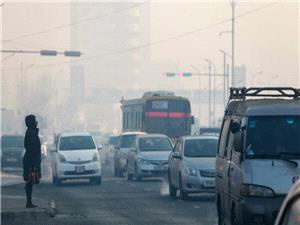
Arya News - The Asian Development Bank (ADB) approved a US $60 million loan — plus a US $500,000 climate-grant — to fund a dedicated Bus Rapid Transit (BRT) corridor in Ulaanbaatar. The project aims to ease traffic jams, boost public transport quality, and reduce emissions.
ULAANBAATAR – The Asian Development Bank (ADB) has approved a $60 million loan to help the Government of Mongolia improve urban mobility in Ulaanbaatar through the construction of a bus rapid transit (BRT) corridor. The project also includes a $500,000 grant from the Innovative Finance Facility for Climate in Asia and the Pacific (IF-CAP).
“The new BRT will be the first system of its kind in Ulaanbaatar, offering passengers a high-quality public transport service,” said ADB Country Director for Mongolia Shannon Cowlin. “We hope it will encourage a shift from private vehicles to public transport, which will help ease traffic congestion, support economic activity, and reduce air pollutant emissions.”
Driven by Ulaanbaatar’s rapid population growth, the number of registered vehicles in the city has risen sharply, causing serious traffic congestion and hampering economic productivity and quality of life. High traffic congestion also affects public transport operations, resulting in very low driving speeds—less than 10 kilometers per hour during the afternoon peak—and increasing emissions from a primarily diesel-powered bus fleet.
The Ulaanbaatar Transport Improvement Project will design and build a BRT system, a high-capacity bus service that is fast, reliable, safe, and cost-effective. The BRT corridor will include median-aligned dedicated bus lanes, off-board fare collection, universally accessible stations, traffic signals that prioritize buses at intersections, and improved streetscapes with bike lanes and better facilities for pedestrians, in line with international best practices and quality standards.
The initiative supports the priorities of ADB’s country partnership strategy for Mongolia, 2025–2028 and Mongolia’s Nationally Determined Contribution to the United Nations Framework Convention on Climate Change , which aims to reduce total greenhouse gas emissions by 22.7% by 2030 compared to a business-as-usual scenario.
ADB is a leading multilateral development bank supporting inclusive, resilient, and sustainable growth across Asia and the Pacific. Working with its members and partners to solve complex challenges together, ADB harnesses innovative financial tools and strategic partnerships to transform lives, build quality infrastructure, and safeguard our planet. Founded in 1966, ADB is owned by 69 members—50 from the region.