Arya News - South Korea is notorious in recent years for the world’s lowest fertility rate. Yet the countless couples who desperately want children and carry heavy financial and psychological burdens remain largely unseen.
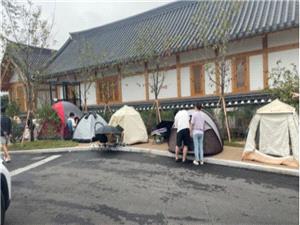
SEOUL – Just after midnight on a frigid Friday in February last year, Noh Hee-young and her husband loaded a tent into their car and began a long, silent drive. From Seoul’s Nowon-gu to Gyeongju, North Gyeongsang Province, the trip took nearly four hours.
When they arrived at their destination, they instantly realized they were late: There was a long line of tents already. The couple set up their own tent and waited, taking turns shivering through the night — one resting in the car and the other in the tent. At 7:30 a.m., people began tearing down their tents, faces pale from cold and exhaustion. A staff member finally emerged to hand out tickets with waitlist numbers.
The tickets ran out before reaching Noh and her husband. Despite the drive and the wait in the tent, they would not be able to see the doctor famed for helping couples conceive through traditional herbal medicine that day. They packed up their tent and drove back to Seoul.
That was two years ago. The couple, now in their late 30s, still has not had a baby, despite having undergone many infertility treatments. “We will not give up until we have one,” Noh said.
South Korea is notorious in recent years for the world’s lowest fertility rate. Yet the countless couples who desperately want children and carry heavy financial and psychological burdens remain largely unseen.
Delayed marriage, demanding workplaces and unrelenting social pressure have created a growing population who dream of having a baby but struggle to conceive. Many of the women interviewed by The Korea Herald said they cannot confide in even their closest friends.
Their days are filled with clinic visits, financial strain and psychological turmoil.
Seo Bo-kyung, 43, boards the first KTX train from Jeonju, North Jeolla Province, before dawn to reach Seoul’s highly sought-after Cha Hospital, a five-hour round trip.
Even with a reservation, she often waits two to three hours. The waiting area is packed, and seats fill quickly. Whenever she visits the hospital, she thinks to herself, “Is this really the country with the world’s lowest birth rate?”
Seo married in 2014 and tried to conceive naturally before leaving her job in 2017 to dedicate herself entirely to treatment. She succeeded with in vitro fertilization in 2019, but miscarried. The trauma and complications were so severe that she nearly abandoned the process altogether.
But turning 43 this year changed her mind. “I decided this might be my last chance,” she said.
She underwent four egg retrievals and three embryo transfers. She also underwent preimplantation genetic testing, which is recommended for older women. She has already spent nearly 10 million won ($6,800), including for other tests.
The government provides a 1.1 million won subsidy per cycle for egg retrieval and embryo transfer. Still, Seo pays about 1 million won for egg retrieval and another 1 million won for each embryo transfer. Actual costs vary widely depending on a patient’s ovarian response, age and the hospital.
Preimplantation genetic testing, an important step in IVF used to screen embryos for genetic abnormalities before implantation, costs more than 3 million won. No governmental support is provided.
Seo currently works as a freelance after-school teacher earning about 1 million won per month, while her husband earns more than 6 million won monthly. The couple has savings that allow them to spend an additional 10 million won on treatment.
Seo plans to try all 20 cycles the government subsidizes. After that, she says she will consider adoption.
Yoo Da-hyun, 37, began fertility treatment with a 10 million won budget.
She has already spent half of it. She believes that the first child should receive unlimited support.
“Compared to a second or third baby, conceiving the first child is the hardest,” she said, contending that government support should distinguish between couples trying for their first child and those who already have children.
She knows that too many treatments are not good for her health, but her desire to have her own child has surpassed that.
Maintaining a job while undergoing infertility treatment is notoriously difficult. Treatments do not follow predictable schedules and patients must constantly adjust to clinic timelines.
People who cannot frequently take leave often feel forced to disclose their treatment plans. Yoo was among those who decided to tell her employer, and the consequences were immediate.
“The moment I said I was preparing for pregnancy through treatment, the interference began,” she said.
“Every time colleagues saw me, they asked: Did it work? When’s the next transfer? How much are you spending? It was overwhelming. I eventually quit my job.”
Kim Eun-hye, 36, who gave birth two years ago, said she never disclosed her treatment — not even to close friends.
“Once you reveal it, the situation can be awkward. Friends who already have babies start gauging your reactions. So I stayed silent.”
Kim said infertility is far more common than people believe, but people rarely talk about it openly.
“Only after someone gives birth do they sometimes say, ‘I struggled with infertility too.’ That’s why the clinics are packed, even though no one seems to mention it.”
She half-joked, “If everyone currently receiving treatment succeeded, Korea’s low birth rate problem would probably be solved.”
The World Health Organization defines infertility as failure to conceive after one year or longer of unprotected sexual intercourse.
The number of patients diagnosed with infertility in Korea has steadily increased, rising from 227,922 in 2018 to 289,133 in 2024, according to the Health Insurance Review and Assessment Service.
In Seoul, the scale is visible in birth records: As of October, 19.8 percent of all newborns, or 7,652 out of 38,733, were born through infertility treatment this year — nearly 1 in 5 babies.
Medical and sociology experts said women’s late marriages, as well as work-related stress, have affected their ability to conceive.
Professor Jeong Ja-yeon of the Cha Fertility Center in Magok-dong, western Seoul, said most patients are now in their late 30s, with a steep rise among women in their 40s.
“Because the age of first marriage is increasing, couples begin trying to conceive later. This naturally leads to more infertility,” Jeong explained.
“Clinics call a successful transition to an obstetrics hospital ‘graduation.’ But for many older women, graduation is delayed by repeated egg retrievals, failed implantations and high-risk pregnancies.”
Shin Gyeong-a, a professor of family sociology at Hallym University, said infertility treatment is incompatible with Korea’s hypercompetitive work culture.
Women in their late 20s to mid-30s — prime reproductive years — are also experiencing peak workplace pressure.
“This is when women are (part of) the main workforce, dealing with long hours, competition for promotions and enormous stress,” she said. “Infertility treatment requires far more time and flexibility than people realize. Treatment is not based on a fixed schedule. You must adjust to the clinic’s schedule. That makes success extremely difficult for full-time workers.”
She said it is common to see women trying for years while employed, only to succeed after leaving their jobs.
“Before calling for people to have more babies, the state and workplaces must provide generous infertility leave and foster a genuinely supportive environment,” she said. “Supporting those who already want children can address low birth rates meaningfully.”
For many couples, the drive to conceive is not about national demographics, but something profoundly personal.
Seo, who is still trying to have a baby after a miscarriage, said, “A child feels like the missing link between us. We’ve been married a long time. I have always hoped for a baby of my own.”
“Korea talks constantly about low birth rates,” she said. “But I hope the country will give more support to those who desperately want to have a child.”