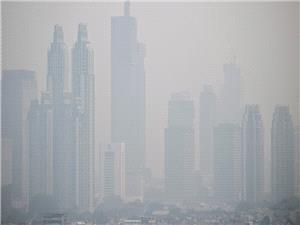
Arya News - Jakarta has consistently ranked among the most polluted cities in the world in recent years.
JAKARTA – Persistent air pollution in Jakarta has triggered nearly 2 million cases of respiratory illness throughout this year, raising concerns over the long-term well-being of the capital’s 11 million residents and the 42 million residents of the greater Jakarta area, the most populous city in the world, according to new United Nations data.
As of October of this year, there were more than 1.9 million people in the capital that suffered from acute respiratory infections, with children accounting to nearly 20 percent of the number, according to the Jakarta Health Agency.
“In general, the high prevalence of acute respiratory infections is triggered by the combination of numerous factors, such as changing weather patterns, air pollution, high population density and human mobility in Jakarta, declining immunity and exposure to pathogens,” agency head Ani Ruspitawati told The Jakarta Post on Monday.
A report published by the Health Ministry on Nov. 29 placed Jakarta as the province with the third highest prevalence of respiratory illness, behind only West Java and Central Java. The ministry reported that more than 12 million people in the country suffered from respiratory problems this year, with the trend continuing to increase since the first week of January.
Experts and activists have long blamed poor air quality in Jakarta for making the capital more vulnerable to environmental hazards.
Jakarta has consistently ranked among the most polluted cities in the world in recent years.
The level of microscopic harmful particles known as PM2.5 in Jakarta on Sunday afternoon reached around 26 micrograms per cubic meter (µg/m3), according to data from Swiss technology company IQAir. It was around 5 times higher than the safety limit set by the World Health Organization (WHO).
Read also: Air quality worsens in Greater Jakarta as govt yet to curb pollution
A short term exposure to air pollution can trigger respiratory problems, while its long term exposure can lead to cardiovascular disease and cognitive impairment, according to Fachrial Kautsar, policy and advocacy manager at Center for Indonesia’s Strategic Development Initiatives (CISDI).
Fachrial warned that extensive exposure to air pollution would burden vulnerable groups more, such as outdoor workers, children, the elderly and low-income households.
“These vulnerable groups are being exposed the most to the pollution. But they have limited access to mitigation efforts, such as air filtering or health services,” Fachrial said in a statement on Saturday.
Public awareness toward such risks remains low, while the gap between awareness and safety measures persists, according to CISDI campaigner Wisya Aulia Prayudi.
“Even when many people are aware of the worsening air quality, many of them are still going outside unprotected [and] unmasked,” Wisya said.
The Jakarta Environmental Agency is currently drafting a roadmap to manage and control air quality in the capital by integrating it with the climate action plan, including the target of reducing 30 percent of its emissions in 2030.
“With the [roadmap], Jakarta is committed to bringing clear air as well as to reduce emissions, making the city healthier and stronger and more sustainable for the future generation,” the agency’s head Asep Kuswanto said late last month.